

A pop-up dictionary that turned Netflix, YouTube and the open web into Korean and Chinese practice. Hover a word, learn it, keep watching.
The extension
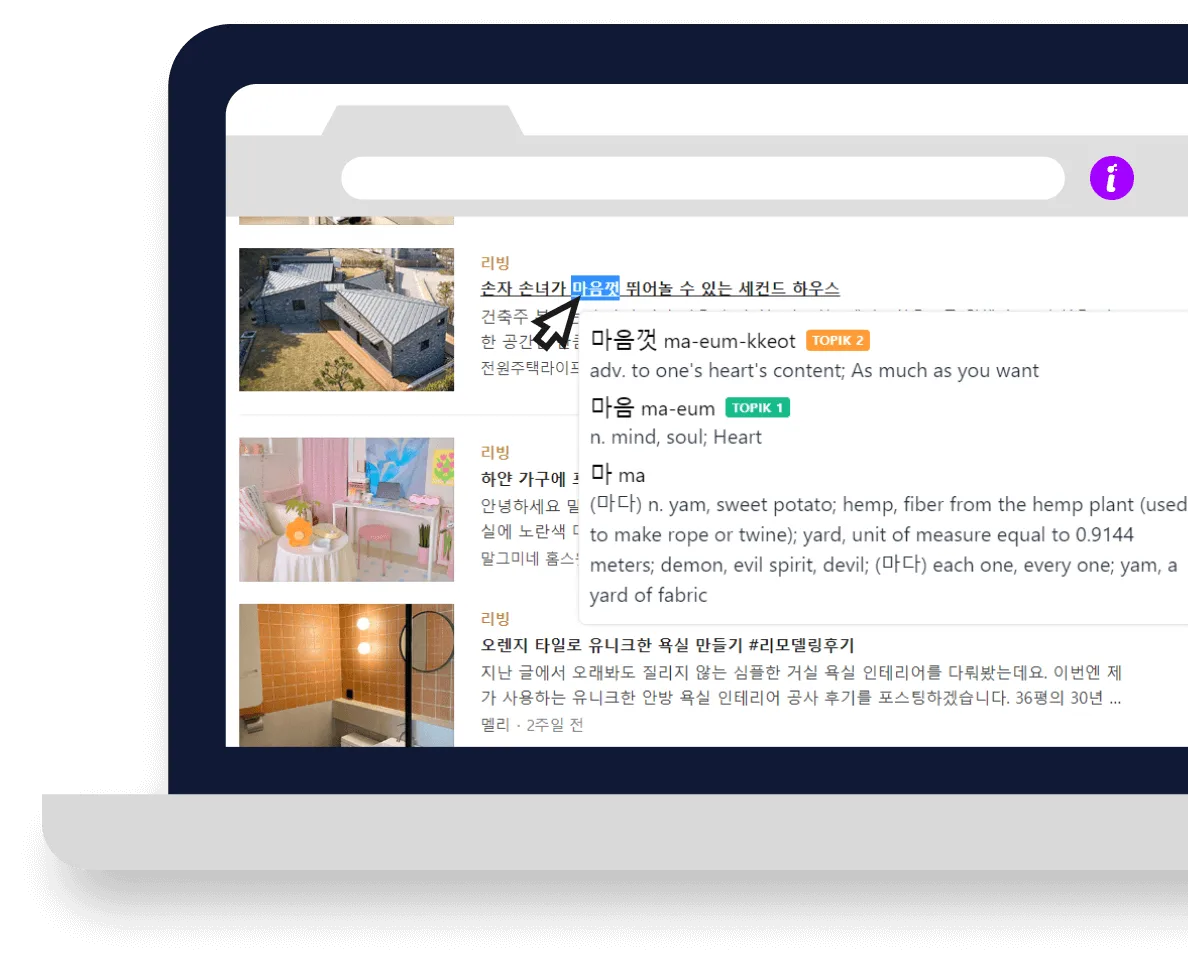
No account, no server, no telemetry — see the privacy policy.
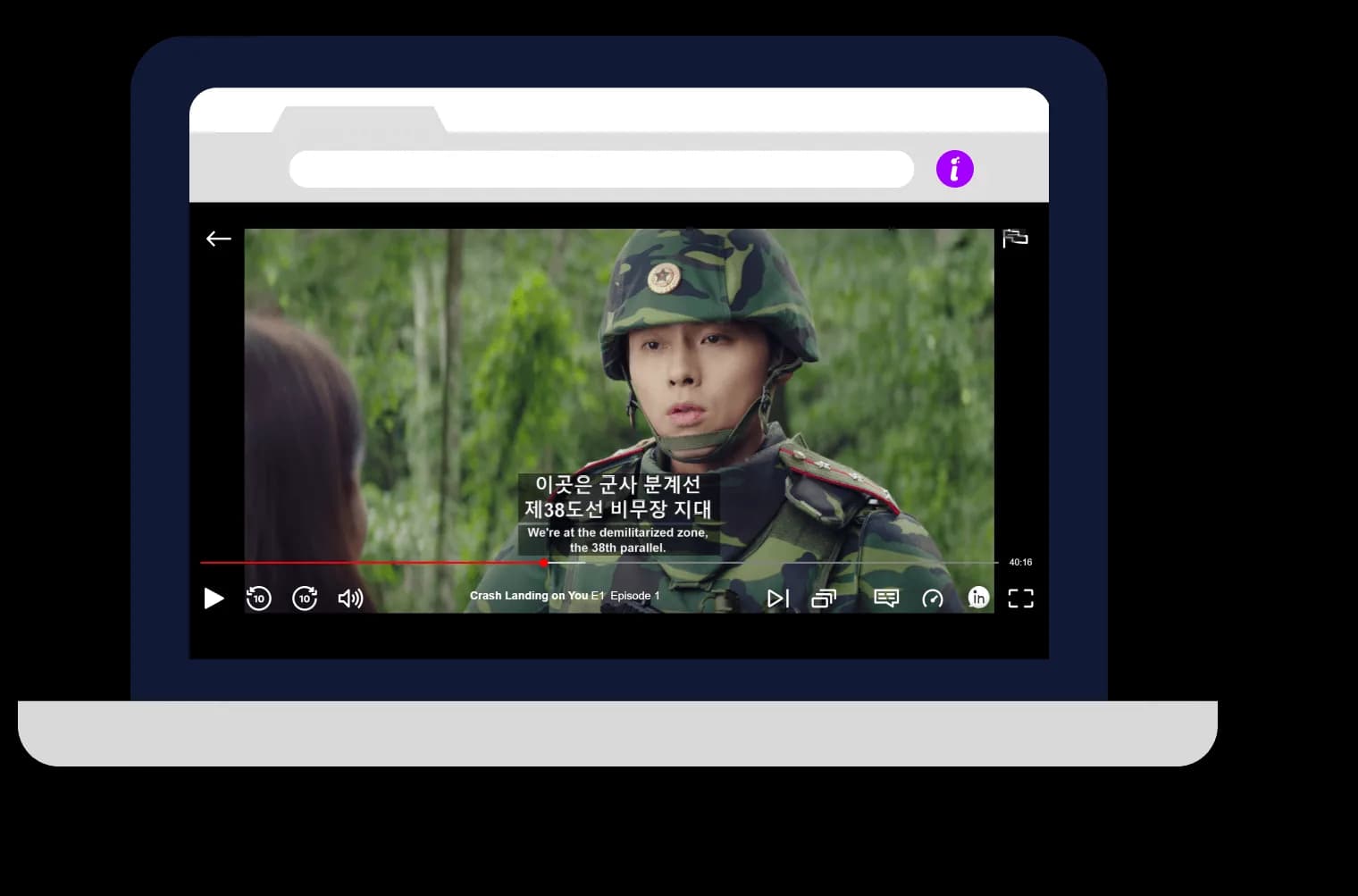
Subtitles you can actually read
Streaming subtitles are burned into a video player — you cannot select them, so no dictionary can reach them. Inkah made Netflix and YouTube subtitles hoverable, showed the target language and your native language at once, and paused the video while you looked something up. That one trick is what most people installed it for.
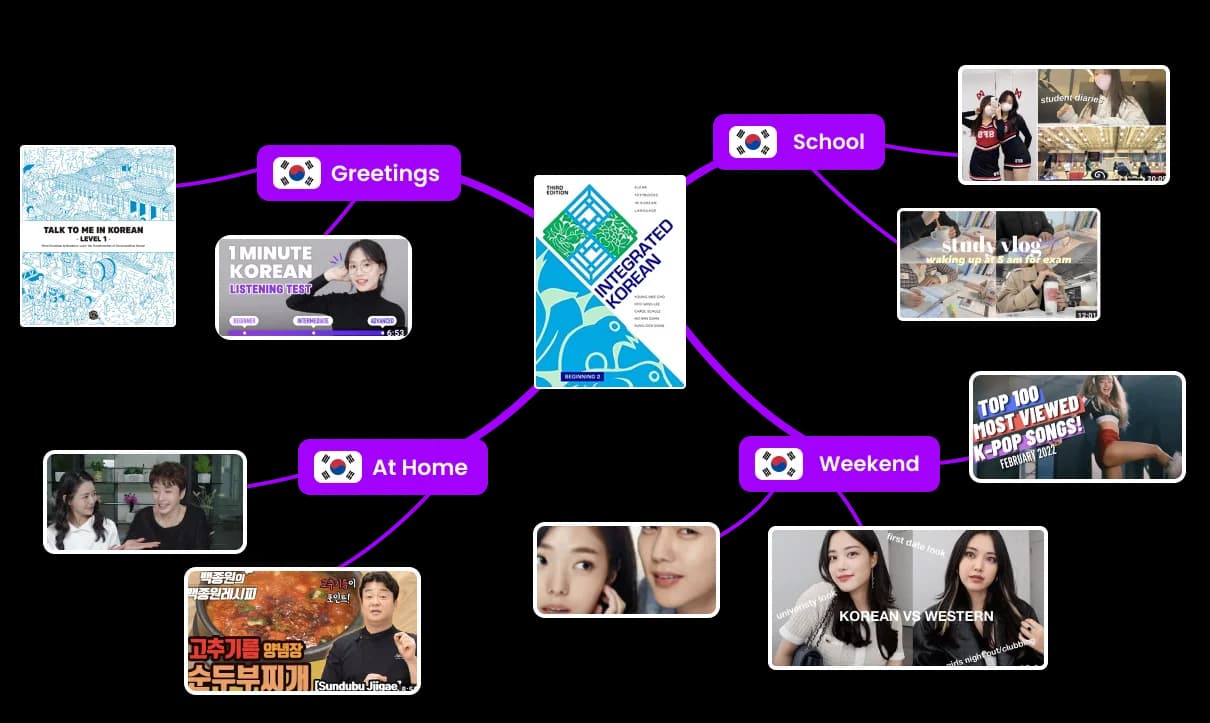
Blocks and a knowledge map
The dictionary was the doorway. The thesis behind it was that fluency is not a course you finish — it is a map you fill in, from whatever you already watch and read. Inkah broke language into blocks of knowledge, tracked which ones you had picked up, and used that to suggest clips, articles and recipes pitched just past what you could already follow.
It bridged textbooks, decks and curricula into a single personal map, and it built the first semantic vector search engine over YouTube subtitles for language learning — so a grammar point in your syllabus could find the exact seconds of video where a native speaker used it.
The mobile app
The apps are gone from the App Store and Google Play. They are worth showing anyway — this is where the block model actually lived. A feed of real Korean media, grammar review built from the clips you had already watched, and spaced repetition underneath it all. It reached 10,000 weekly active learners across iOS, Android, Chrome and Firefox on $240K raised and a team of ten spread across four countries.
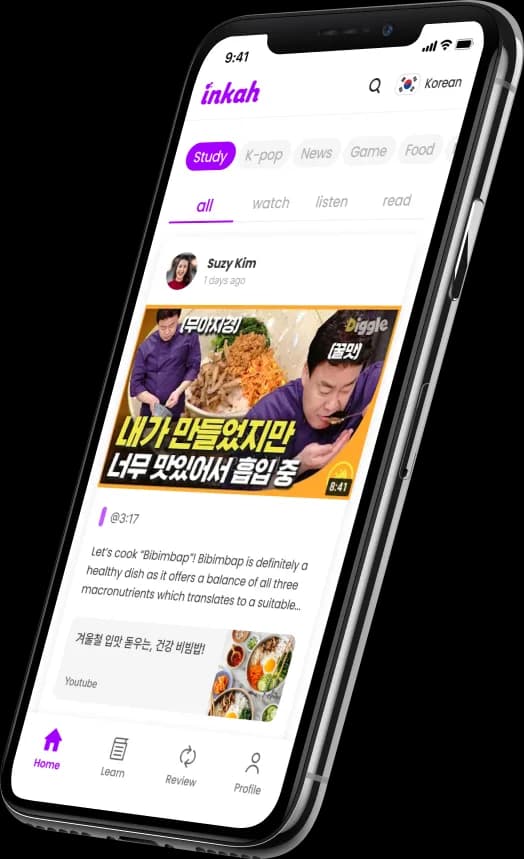
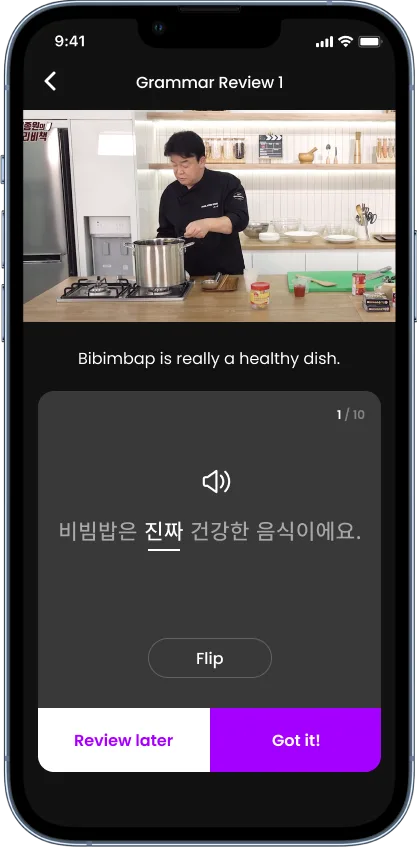
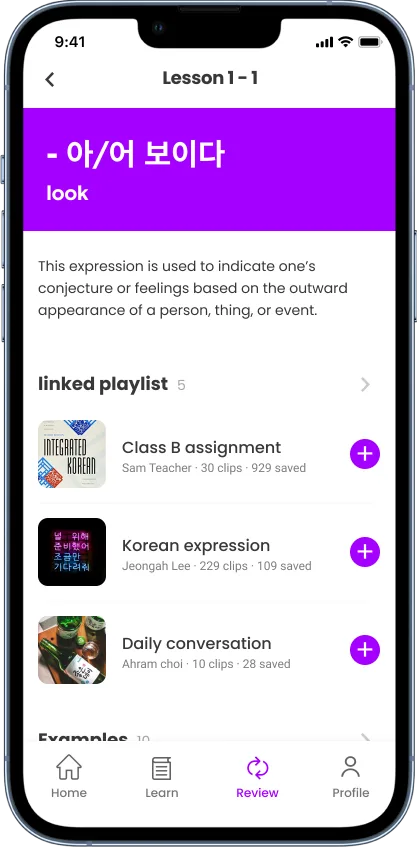
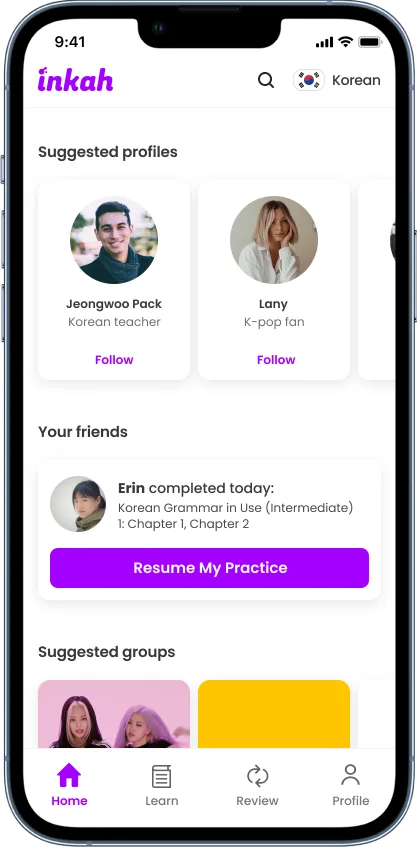
The other half was social. Learners followed teachers and each other, shared syllabuses, and kept daily practice going together — the part that is hardest to rebuild alone, and the reason the app needed a company behind it in a way the extension never did.
Rebuilt in the open
The original extension was Manifest V2, which Chrome has since retired. Rather than patch it, the whole thing was rewritten as an open-source project under MIT — WXT and Manifest V3, with the dictionaries held in IndexedDB via Dexie rather than in memory, because an MV3 service worker can be killed at any moment and cannot hold 110MB the way the old persistent background page did.
| Language | Dictionary | Entries |
|---|---|---|
| Chinese | CC-CEDICT | 191K |
| Korean | KEDict + Vicon | 1M+ |
- Greedy longest-match tokenization, so 비빔밥 resolves as one word rather than three characters
- Korean lemma resolution — conjugated forms look up back to their base via the Vicon inflection tables
- Everything local: no account, no server, no telemetry. The dictionaries live on your machine
- First install imports ~1.3M entries in about ten seconds; warm lookups land under a millisecond
Contributions welcome — the source is on GitHub, and adding a new language is a documented path rather than a rewrite.
Curious about the rest of the work?